Refrigerator Repair Service | Appliance Repair Service
Diagnosing cooling failures, evaporator frost buildup, faulty start relays, and persistent water leaks across all major residential refrigerator styles.
About This Service
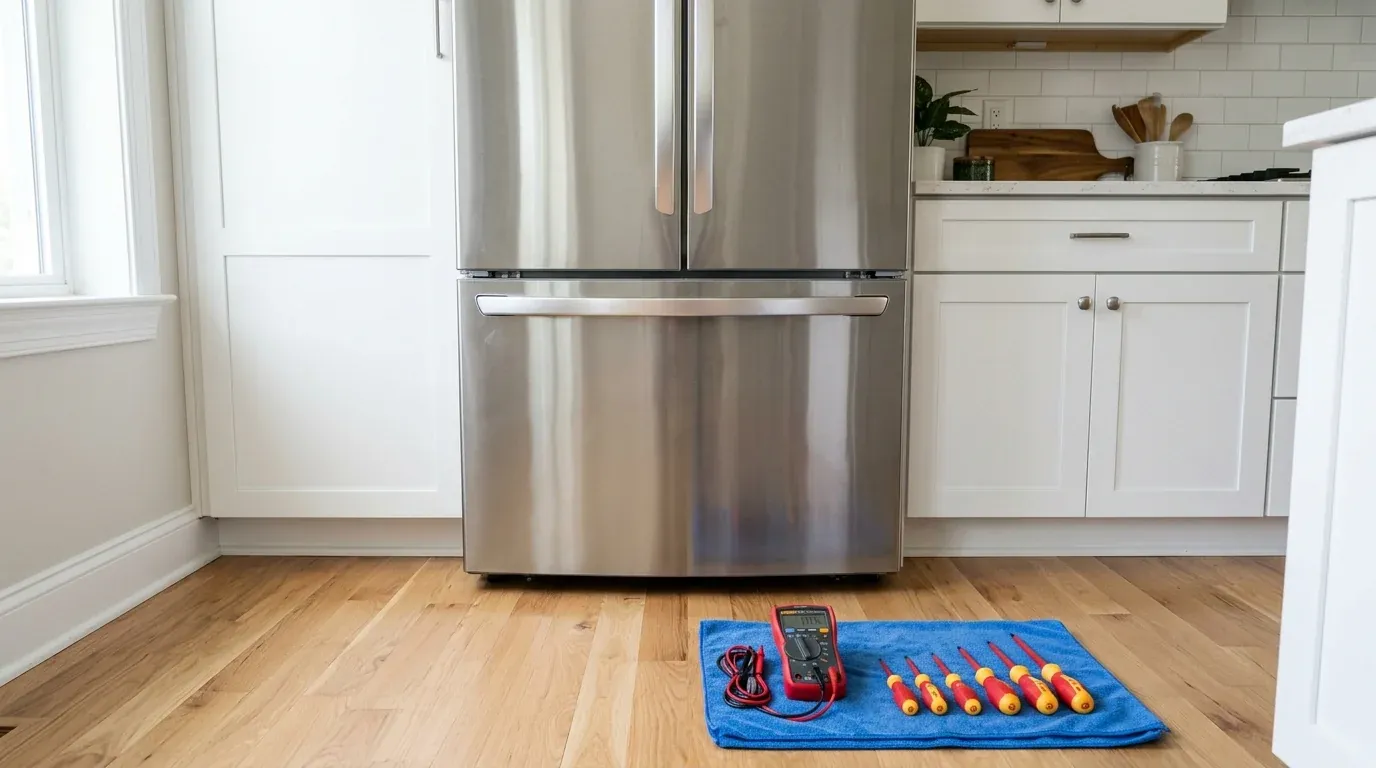
Food preservation depends on continuous, balanced cooling performance throughout every compartment. Typical failures stem from blocked defrost drain troughs, clicking compressor relays, worn condenser fan motor bearings, or failed temperature thermistors. Technicians arrive with multi-meter diagnostic equipment to test sealed system pressures, inspect evaporator frost distribution, and assess digital inverter control boards. Whether your French door unit is leaking meltwater into lower crisper bins or side-by-side freezer coils are encrusted with frost, prompt troubleshooting prevents extensive food loss and keeps your kitchen running smoothly.
Diagnostic Approach for Modern Refrigeration
Refrigerators combine pressurized sealed refrigerant lines with sensitive microprocessors and automatic defrost timers. Rather than guessing which component failed, technicians systematically measure thermistor resistance values, test compressor winding continuity, and verify defrost heater operation. This disciplined process protects your sealed system and prevents repeat cooling emergencies.
Common Symptoms We Inspect
- Fresh food compartment feels warm while freezer stays frozen
- Compressor clicks loudly every few minutes without starting
- Meltwater pools under lower vegetable crisper drawers
- Heavy frost blankets the rear interior freezer wall
- Continuous buzzing from worn condenser or evaporator fan motors
Standard Diagnostic Procedures & Solutions
- Defrost System Continuity Testing: Technicians measure resistance across the defrost heater rod and bimetal termination switch to ensure automatic melt cycles function properly.
- Compressor Start Relay Inspection: Testing PTC solid-state start relays and run capacitors confirms whether compressor motor windings receive adequate starting torque.
- Airflow Damper & Fan Diagnostics: Verifying motorized damper door actuation and evaporator fan RPM ensures chilled air circulates evenly down to fresh food shelves.
- Drain Line De-icing & Sanitation: Clearing frozen defrost troughs and flushing duckbill check valves stops water from overflowing onto kitchen flooring.
Frequently Asked Questions About Refrigerator Repair Service
Restore Your Refrigerator Repair. Call Today.
Speak directly with an appliance repair specialist to discuss your machine symptoms and schedule a diagnostic visit.